Monday, November 27, 2017

Tutorial for Multiple Choice Trivia app (in video format)

Here is a link to how to create a multiple choice trivia app:

http://www.appinventor.org/content/ai2apps/intermediateApps/presidentsQuiz

It's in 7 brief videos.

Since we're making it multiple choice, please skip Step 5 (the video), as that step helps you add a text box if you want to make it fill-in-the-blank.

We've already done most of this in class, so you may only need to watch the videos where you're having difficulty.

(Or you may just want to go over it completely just to make sure everything is right).

The goal is to spend an hour or two working on it so that if you're making a trivia app for your project you can make it multiple choice.

Jack

Wednesday, November 15, 2017

Wedding Photographer Wins $1.08 million in Libel Lawsuit


Wedding Photographer Wins $1.08M in Defamation Suit Against Couple


Wedding photographer Andrea Polito has been awarded $1.08 million by a jury
 in her defamation lawsuit against a couple who launched a public campaign 
against Polito over her $150 album cover charge.

It all began back in January 2015, when the local Dallas, Texas-based news station NBC 5 aired an investigative report into one couple’s accusations against Polito. Newlyweds Andrew and Neely Moldovan accused Polito of demanding an extra $150 for an album cover after the couple had already purportedly paid $6,000 for the wedding photography. The Moldovans say they expected the album to come with a free cover, and NBC 5 reported that Polito was refusing to provide a CD of photos until the album cover was paid for.
After an enormous online backlash against Polito, the photographer published an open letterexplaining her side of the story. She explained that she offered the couple a free album cover before any mention of a news interview had come up, and said that the couple instead decided to go ahead with smearing Polito and her business publicly. She also says NBC5 didn’t provide her sufficient time to respond before airing its story.
“We had taken action to make things right, and instead this bride went directly to the media, bragging about the upcoming news story on all of her social media accounts and creating a very large following, which was boosted by her business as a professional social media expert,” Polito wrote. “If this story were truly based how upset and hurt she was, she would not post statements to humiliate me or harm my business.
“Statements like, ‘I’m pretty sure her business is ruined,’ ‘I hope this goes viral,’ ‘feeling excited,’ and ‘justice has been served’ are not the actions of a concerned and hurt bride; they are actions of an individual trying to take someone down and instigate a lynch mob of negativity across the nation.”


The Moldovans in a still frame from their original NBC5 interview.

In April 2015, Polito filed a $1 million defamation lawsuit against the Moldovans, accusing the couple of defamation, business disparagement, tortious interference with prospective contracts, and civil conspiracy.
Last Friday, a jury awarded Polito $1.08 million, finding that the couple “wrongfully attacked” Polito and that their public campaign against the photographer was “false and malicious.” The Moldovans can appeal the ruling. Here’s a court document provided to PetaPixel by Polito:
“Proud to say that after a week long, hard fought trial, the jury returned a verdict of over $1 Million, including punitives, for Andrea Polito, who was defamed by two terrible, shameful people,” Polito’s attorney, Dave Wishnew, writes. “As I told the jury: ‘freedom of speech is not freedom from consequence.’ There are real world consequences for maliciously attacking a business online with venom and lies.
“The jury agreed and made a statement that publicly lying, shaming, and online bullying is unacceptable. Now justice is served.”
Polito tells PetaPixel that in the 10 years prior to the NBC 5 story, her photography business was generating in the “high six figures” on average from shooting photos alone (i.e. no coaching or seminars). She says her photo business was destroyed in a matter of days after the Moldovans went public with their false accusations.
The photographer says she’s planning to rebuild her business but will be shifting her focus toward helping other photographers grow their businesses. She has also established a new non-profit foundation called SASS (Surviving After Social Shaming) to help people who have had their reputations torn down by online mobs.

Glenn Beck settles libel suit

Glenn Beck, TheBlaze Settle Teen Clock-Maker Libel Suit

Law360, Dallas (October 25, 2017, 7:10 PM EDT) -- A Dallas-area teen who made national headlines after he was arrested for bringing a homemade clock to school has reached a settlement with Glenn Beck and his news network TheBlaze Inc. after his libel claims against the conservative commentator were dropped by a trial court. 
The Fifth Court of Appeals agreed Tuesday to partially dismiss an appeal in which Ahmed Mohamed and his father, Mohamed Mohamed, sought to revive claims a handful of pundits had made defamatory comments about the teen, in light of the settlement reached with Beck and TheBlaze. Still pending is the Mohameds’ appeal of the dismissal of their claims against commentators Jim Hanson of the Center for Security Policy and Ben Shapiro.

A Dallas trial judge in January and February dismissed the Mohameds’ claims against Beck, Hanson and Shapiro under the Texas Citizens Participation Act, a free speech law intended to provide for early dismissal of strategic lawsuits against public participation, or SLAPP suits. The Mohameds were ordered to pay a total of more than $270,000 in attorneys’ fees to the defendants.

Michael Grygiel of Greenberg Traurig LLP, an attorney for Beck and TheBlaze, declined to comment Wednesday, saying the terms of the settlement are confidential.

Lawyers for the Mohameds did not immediately respond to a request for comment about the settlement or the pending appeals. Lawyers for Shapiro and Hanson did not immediately respond to requests for comment on the pending appeals.

Ahmed Mohamed was a 14-year-old high school student in Irving, Texas, when he brought a homemade alarm clock to school. One of his teachers apparently thought the device was a bomb, and Mohamed was arrested and suspended from school, then cast into a media spotlight as news of his arrest spread.

Much of the commentary following news of his arrest was supportive of Mohamed — even then-President Barack Obama weighed in to praise his love of science. But other commentators said the boy shouldn’t have brought in the clock because it looked like a bomb, and the family says Shapiro and Hanson made inaccurate, biased and sensationalized statements that insinuated they may have committed a crime, perpetrated a hoax and had ties to terrorist groups.

The Mohameds argued in September their claims against Shapiro, Hanson and the CSPshouldn’t have been dismissed under Texas' anti-SLAPP law, saying it was never meant to protect speech that “consciously ignored actual, verifiable facts” and accused the family of criminal and deceitful conduct. They argued they had demonstrated a meritorious claim that should have survived early dismissal.

Shapiro said in a brief filed Monday the law was “designed to quickly dismiss pernicious lawsuits” aimed at stifling free speech and that people wishing to debate public issues should not be silenced for fear of a potentially crippling legal judgment or legal fees. Shapiro argued the Mohameds had actively sought the media spotlight and fueled the public controversy, pushing themselves into the limelight and becoming limited-purpose public figures who must establish actual malice for their libel claims to survive.

Shapiro also argued his statements had been nonactionable opinion and rhetorical hyperbole.

Hanson and the CSP said in a response brief filed Monday the Mohameds were required to show the statements were made with actual malice, arguing Ahmed Mohamed and his father were at least limited-purpose public figures involved in a matter of public concern. They said the Mohameds failed to show Hanson’s statements are libelous as a matter of law or that he spoke with actual malice.

Mohamed is represented by Susan Hutchison and Christopher Stoy of Hutchison & Stoy PLLC and Thad Spalding and Morgan McPheeters of Kelly Durham & Pittard LLP.

TheBlaze and Beck are represented by Casey Moore and Michael Grygiel of Greenberg Traurig LLP.

Hanson and the Center for Security Policy are represented by David Yerushalmi and Robert Muise of the American Freedom Law Center and Pete Rowe of Law Office of Pete Rowe PC.

Shapiro is represented by Chris Gober of The Gober Group PLLC and Kurt Schlichter of Schlichter & Shonack LLP.

The case is Mohamed v. TheBlaze Inc. et al., case number 05-17-00278-CV, in the Texas Court of Appeals for the Fifth District.

--Editing by Marygrace Murphy.

Brett Ratner Sues for Libel Over Rape Allegation Posted on Facebook


Ratner Sues For Libel Over Rape Allegation Posted On Facebook


Opinions expressed by Forbes Contributors are their own.
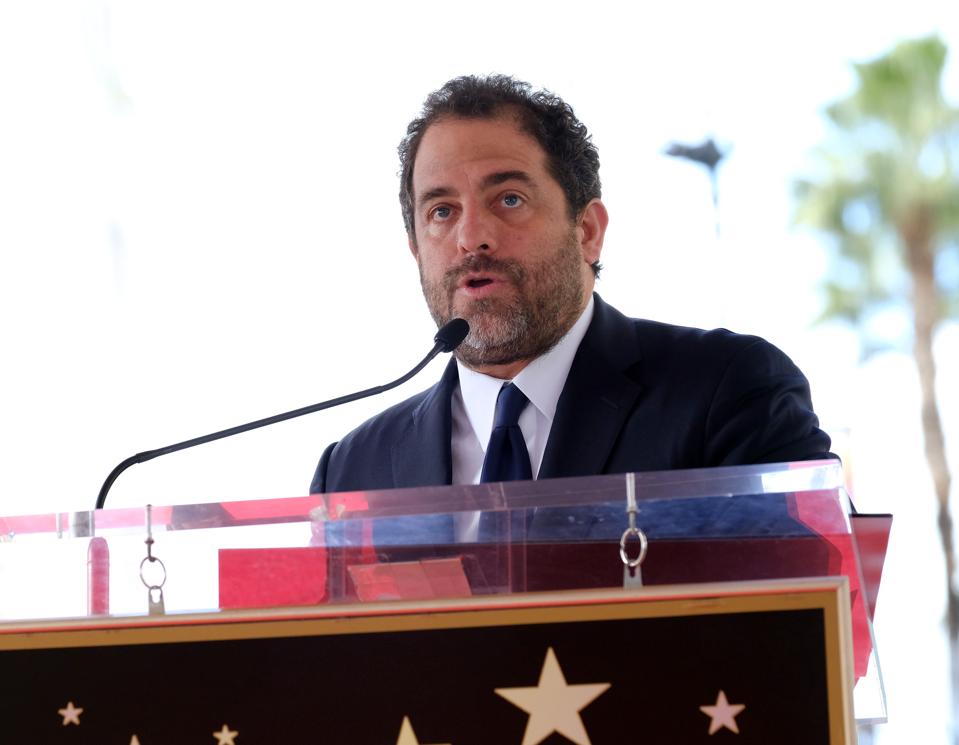
Brett Ratner (Photo credit CHRIS DELMAS/AFP/Getty Images)
Hollywood director and producer Brett Ratner is suing Melanie Kohler for libel over a Facebook post in which she accused him of raping her “about 12 years ago.”
Ratner has been in the news because of a Los Angeles Times article in which six women accused him of sexual harassment or misconduct. Kohler, however, was not one of those six women, and, in fact, published her post on social media on October 20, a week before the article came out.
The post in question has since been deleted but according to Ratner’s complaint said, “Ratner was a rapist on at least one night in Hollywood about 12 years ago” and that Ratner “preyed on me as a drunk girl [and] forced himself upon me.”

Ratner's Complaint
Ratner’s complaint, filed in federal court in Hawaii, alleges that the post is “libel per se,” which is a “defamatory statement considered to be so harmful on its face that the plaintiff need not prove special damages.”
Common examples of statements that are libel per se include those that:
(i) relate to the person’s business or profession to the person’s detriment;
(ii) falsely claim that the person committed a crime of moral turpitude;
(iii) imputes unchastity on the person; or
(iv) claim that the person suffers from a loathsome disease.
Ratner calls Kohler’s post “deliberately false and malicious” and alleges that Kohler published it “with knowledge of its falsity, maliciously, and with the intent to harm [Ratner’s] reputation and standing.”
Ratner claims his personal and professional reputations have been harmed by Kohler’s post and seeks special, general and punitive damages as well as payment of his legal fees.
Legal Standard for Libel
Libel lawsuits are infamously difficult for public figures to win because the legal standard for proving them is so high. A public figure must not only allege but also show by a preponderance of the evidence that the defendant acted with “actual malice” in making the allegedly defamatory statement. This standard has been defined by courts as someone making a statement while knowing it is false or acting with reckless disregard for its truth or falsity.
The Digital Media Law Project notes that this standard is exceptionally difficult for plaintiffs to meet as “only a handful of cases over the last decades” have managed to show actual malice and win.
Current Ratner Situation
Ratner has “vehemently” denied the accusations in the Los Angeles Times article, but the fallout has been swift and severe. On a professional level, he has ended his relationship with Warner Bros., with whom he had a first-look deal, and he has also seen Playboy Enterprises postpone plans for a Hugh Hefner biopic he was scheduled to direct and produce.
Meanwhile on a personal level, Amy Kaufman, the journalist who broke the story for the Los Angeles Times, has tweeted that she has been contacted “by more than 20 new accusers” whose claims she is investigating, so it doesn't seem the sexual harassment and misconduct allegations against Ratner will disappear anytime soon.
And it doesn't look as though the libel lawsuit will go away quietly either. Kohler has hired attorney Roberta Kaplan, who spearheaded the fight against the Defense of Marriage Act (DOMA) in front of the Supreme Court of the United States, to represent her.
Kaplan recently told USA TODAY, “We always knew that they would pick one woman to victimize further in an effort to bully other women into silence. Mr. Ratner and his lawyers can try to erase the truth through threats and intimidation, but courts decide cases based on the facts and the law. So our message to Mr. Ratner and his lawyer is short and simple: See you in court."
Will any of this ever see the inside of a courtroom? Stay tuned.

Can Bill O'Reilly win a libel suit he filed against someone who posted info on Facebook?

Lisa Bloom Says Bill O'Reilly Is Libel-Proof


"His reputation is about as low as it could be," said Bloom, who is defending Michael Panter.
Rob Kim/Getty Images
On Oct. 27, Bill O'Reilly's legal team filed the paperwork to initiate a lawsuit against Michael Panter, a former New Jersey politician, for making "defamatory and false statements" about the former Fox News host in a Facebook post that went viral.
But Lisa Bloom, who recently began representing Panter, said on Monday that O'Reilly is libel-proof because his reputation is "about as low as it could be."
Bloom said that Panter's post had no damage on O'Reilly's career prospects, which she said were already damaged because of several widely publicized reports detailing sexual harassment cases he settled for millions of dollars. "The idea that Michael Panter's Facebook post caused him any additional damage is preposterous," she said.
In his Oct. 24 Facebook post, Panter wrote about an ex-girlfriend of his who had settled a sexual harassment claim against O'Reilly that stemmed from her time working at Fox News. Panter alleged that O'Reilly called his ex and asked her for dirt about a woman that had accused him of sexual harassment.
Panter, in a joint interview with Bloom, said he didn't talk to his ex before sharing the story on Facebook. "I was very careful not to name her or the other women who are mentioned," he said. "I didn't want to get her in trouble. I wanted to truthfully provide my recollections of these experiences I had."
Bloom said that Panter has not yet been served with a summons with notice — O'Reilly has 120 days to do so. He also has not filed a report specifying which of Panter's words were defamatory.
But, while O'Reilly's suit has not progressed beyond his Oct. 27 filing, Bloom said she and Panter are taking the matter seriously.
"I have to assume that this is going to be a long, hard-fought case, and I'm in for that," Bloom said. Panter has floated the possibility of filing a countersuit against O'Reilly, and Bloom said that O'Reilly has made a number of actionable comments about her client.
Panter told The Hollywood Reporter over the weekend that several law firms were interested in representing him in the case. He chose Bloom, he said, because "she was so passionate about this issue, and has experience leveling the playing field on behalf of folks like me."
Before bowing out of his team in early October, Bloom came under criticism for working on behalf of disgraced Hollywood mogul Harvey Weinstein.

Difficult to win a libel suit against the media:


Memo to Roy Moore: 

It is very difficult to win a libel suit against the media

  
 Play Video 0:39
Roy Moore threatens to sue The Washington Post
Alabama Republican Senate candidate Roy Moore threatened to sue The Washington Post over a report that Moore initiated a sexual encounter with a 14-year-old girl when he was 32. (Judge Roy Moore for U.S. Senate/Facebook)
Senate candidate Roy Moore is threatening to sue news outlets, including The Washington Post, for reporting on allegations that he groped, harassed or otherwise pursued teenage girls when he was in his 30s. If he actually follows through — this could be nothing more than a scare tactic — the Alabama Republican will have a hard time proving that he is a victim of libel.
As his state's former chief justice, Moore surely knows the relevant legal standards. But here's a reminder, courtesy of the Legal Information Institute at Cornell:
The U.S. Supreme Court's 1964 decision in New York Times v. Sullivan has restricted defamation claims, limited by the First Amendment concerns. Thus, for instance, public officials and public figures (people who are famous) must show that statements were made with actual malice to recover in an action for defamation.
Actual malice means that a statement was made with knowledge that it was false or with reckless disregard of whether it was false. In addition, a plaintiff must show actual malice by “clear and convincing” evidence rather than the usual burden of proof in a civil case, preponderance of the evidence.
When Sarah Palin sued the New York Times for libel in June, I asked Jonathan M. Albano, a partner at Morgan, Lewis & Bockius in Boston, which has represented the Boston Globe for decades, to explain how the precedent set by Times v. Sullivan applies to contemporary cases. He told me that “reckless, in this area of the law, does not mean extremely negligent. It means that the defendant entertained serious, subjective doubts about the truth of the statement, sometimes rephrased as publishing with a 'high degree of awareness of probable falsity.'
subscribe
The story must be told.
Your subscription supports journalism that matters.
“Proof of negligence is not enough to show actual malice — the plaintiff has to prove more than that a reasonable investigation or a reasonable person would have or should have known the statement is false.”
The Palin case is instructive here because it shows that merely demonstrating a news article's inaccuracy is not enough to win a libel suit. The former GOP vice-presidential nominee sued the Times over an editorial published on the day of the shooting at a Republican practice for the Congressional Baseball Game. Palin argued that the Times defamed her by falsely suggesting that her political action committee inspired the shooter in the rampage that targeted congresswoman Gabby Giffords (D-Ariz.)
The editorial's claim was indeed false; the Times acknowledged the error. But a mistake — even a rather careless one — is not the same as “actual malice.”
“What we have here is an editorial, written and rewritten rapidly in order to voice an opinion on an immediate event of importance, in which are included a few factual inaccuracies somewhat pertaining to Mrs. Palin that are very rapidly corrected,” Judge Jed S. Rakoff of Federal District Court in Manhattan wrote in his ruling. “Negligence this may be; but defamation of a public figure it plainly is not.”
Even if Moore could somehow disprove the accusations made against him by five women, published in The Post and other news outlets, he still might not have enough evidence to win a libel case.

A list of prominent shows/production companies run by POC

Recognizing that the lack of diversity continues to be a problem in the entertainment media industry, it's important to be aware of thos...